Upper Mustang Trek
Overview
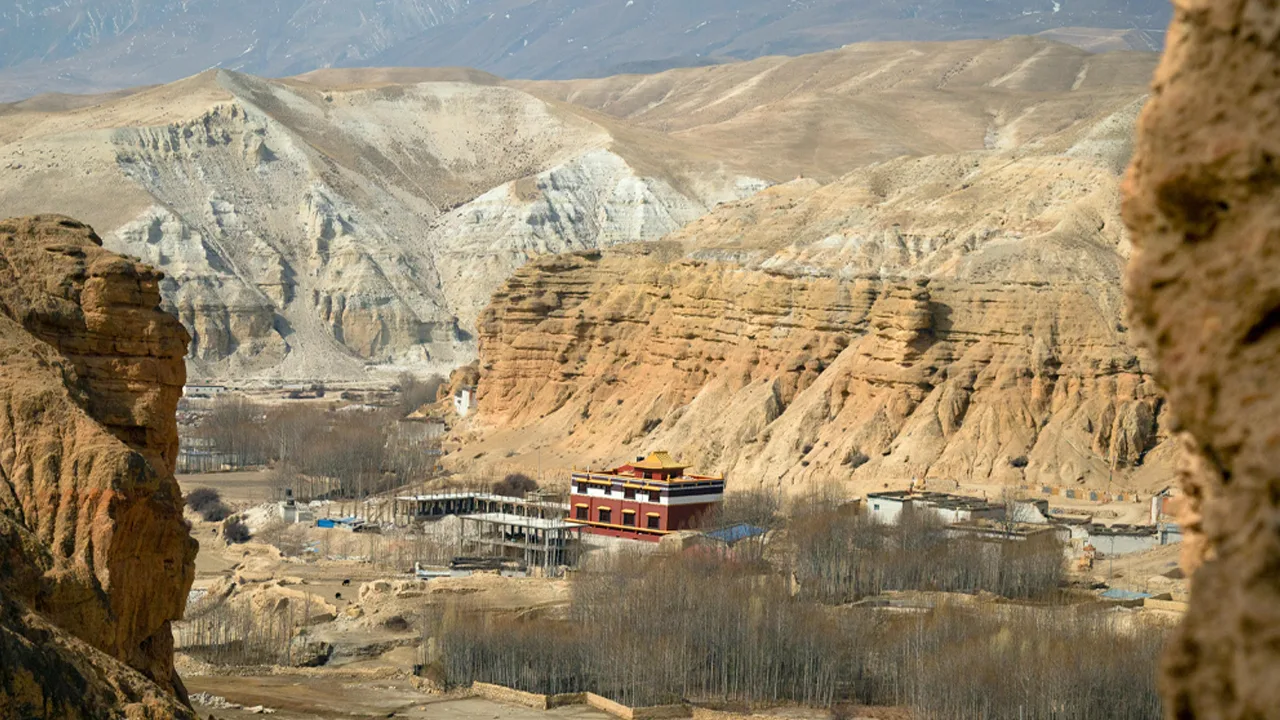
The Upper Mustang Trek is one of Nepal’s most unique and culturally rich trekking experiences, taking you deep into the Mustang region, often called the “Last Forbidden Kingdom.” This trek is perfect for travelers who want to explore remote Himalayan landscapes, desert-like terrains, and traditional Tibetan culture without the crowds of popular trekking routes.
The journey begins from Jomsom, following the Kali Gandaki Valley, and gradually ascends to the Upper Mustang region, passing through small villages, barren cliffs, and windswept plateaus. Along the way, trekkers witness traditional Tibetan-style houses, ancient monasteries, and prayer walls, offering an authentic glimpse into a culture largely untouched by modern influences.
One of the highlights of the trek is Lo Manthang, the walled capital of Upper Mustang. Here, visitors can explore ancient palaces, monasteries, and local markets, and engage with friendly locals who preserve centuries-old traditions. The trails also offer spectacular views of Himalayan peaks, including Dhaulagiri, Nilgiri, and Annapurna ranges, contrasted against Mustang’s arid desert-like landscapes, creating a surreal trekking experience.
Accommodation along the trek is in tea houses and lodges, providing basic yet comfortable rooms and locally prepared meals. Experienced guides and porters assist with navigation, safety, and cultural insights. Daily trekking is generally 4–6 hours, allowing trekkers to enjoy the unique scenery, take photographs, and immerse themselves in the culture.
Over the course of the trek, travelers experience quiet trails, ancient villages, sacred monasteries, and stunning desert landscapes, making it ideal for photographers, culture enthusiasts, and adventure seekers. By the end of the journey, trekkers return to Jomsom or Pokhara, carrying unforgettable memories of Mustang’s mystical beauty, Lo Manthang, and Himalayan grandeur.
Itinerary
Upon arrival at Tribhuvan International Airport in Kathmandu, travelers are warmly welcomed by their guide and driver. After clearing immigration and collecting luggage, you’ll be transferred to your hotel in the city, where you can rest, refresh, and recover from your international flight. Depending on your arrival time, you may have the opportunity to explore the vibrant streets of Thamel, the main tourist hub, or enjoy a traditional Nepali meal at a local restaurant.
Kathmandu, the capital of Nepal, is a fascinating city that blends ancient culture with modern life. You’ll notice the bustling markets, colorful temples, prayer flags fluttering in the wind, and historic architecture as you walk through its streets. This day is primarily for adjusting to the city’s rhythm, resting, and preparing for your upcoming trekking adventure or sightseeing tour. Your guide will also provide a briefing on the trek ahead, including tips on packing, acclimatization, and local customs. Overnight stay is at a comfortable hotel in Kathmandu, offering a convenient base to begin your Nepal journey.
- Altitude: 1400
- Accommodation: Hotel
- Meals: Lunch/Dinner
Your day begins with a refreshing morning departure from Kathmandu (1,400 m), heading toward the beautiful lakeside city of Pokhara (822 m). The drive follows the famous Prithvi Highway, one of Nepal’s most scenic road routes. As you leave the busy city behind, the landscape quickly transforms into green hills, flowing rivers, terraced farmlands, and charming rural settlements. One of the constant companions throughout the journey is the Trishuli River, whose swirling whitewater rapids make this highway popular for river rafting adventures.
Along the way, you’ll pass through small market towns like Malekhu, famous for its fresh river fish, and you’ll enjoy roadside views of deep gorges, suspension bridges, and forest-covered valleys. On clear days, the distant silhouettes of the Annapurna and Manaslu ranges appear as you approach Pokhara, hinting at the beauty waiting ahead. The highway also offers glimpses of local life—farmers working in terraced fields, kids walking to school, and traditional homes perched on hillsides. Lunch is usually taken at a highway restaurant overlooking the Trishuli or Marsyangdi River, giving you a relaxing break with scenic views.
As you enter Pokhara, the atmosphere immediately feels calmer and more peaceful. Known as the adventure capital of Nepal, Pokhara welcomes you with its wide streets, lakeside cafés, paragliding sites, and stunning mountain views. After checking into your hotel, you’ll have free time to stroll around Lakeside, enjoy boating on Phewa Lake, or simply relax at your hotel balcony with the Annapurnas glowing in the distance.
- Altitude: 820
- Accommodation: Hotel
- Meals: B/L/D
Your adventure begins early in the morning as you head to Pokhara Airport for a short but unforgettable mountain flight to Jomsom, the headquarters of Mustang. The 20-minute flight itself feels like entering another world—your aircraft flies right between two giant Himalayan walls: the Annapurna range on one side and the Dhaulagiri massif on the other. The dramatic views of Nilgiri, Tukuche Peak, Annapurna I, Dhaulagiri, and deep river gorges make this one of Nepal’s most breathtaking domestic flights. As you land at Jomsom Airport (2,700m), you instantly feel the dry, chilly mountain breeze—a signature of the Kali Gandaki Valley.
After a quick breakfast in Jomsom, you begin trekking north along the Kali Gandaki River, walking through the windy plains, small apple orchards, and traditional Mustang settlements. The trail is mostly flat, making it a comfortable start to your trek. You will pass through Ekle Bhatti, a small settlement known for its tea houses and wide-open views of the valley. Along the way, you see striking geological formations, eroded cliffs, and the famous “wind tunnels” of Jomsom, where the afternoon winds blow fiercely due to the unique valley shape.
As you approach Kagbeni, the scenery becomes more dramatic—red, brown, and grey cliffs tower above the village, signaling the entrance to Upper Mustang. Kagbeni sits like an ancient fort town, with narrow alleys, mud-brick houses, fluttering prayer flags, and the iconic Kag Chode Thupten Samphel Ling Monastery, which you can visit upon arrival. From the village, you also get stunning views of Nilgiri (7,061m) glowing beautifully in the light. Kagbeni is one of the most photogenic villages in the entire Mustang region and is famous for its unique Tibetan-influenced culture.
- Altitude: 2858
- Accommodation: Lodge
- Meals: B/L/D
Your day begins with a calm walk through Kagbeni’s narrow alleyways before you slowly follow the trail north into Upper Mustang territory. As soon as you leave the village, you feel the dry Mustang wind—yes, the famous Mustang wind that tries to push you back like a strict gym trainer. The trail follows the wide Kali Gandaki Riverbed, and you’ll notice how the landscape suddenly changes from green to sandy, like someone switched the background in a video game. You pass by Tangbe Village, where whitewashed houses, apple orchards, and black, red, and white chortens create a unique Mustang vibe.
After Tangbe, the trail becomes more dramatic. You’ll walk through narrow canyons, cross small ridges, and follow a dusty path where you might meet horses, mules, and maybe even some curious goats judging your trekking pace. Eventually, you reach Chhusang, a small settlement perfect for a short rest. From here, there is a final climb—slow but steady—toward Chele, a peaceful village tucked on a high ridge. The views of the Kali Gandaki valley and the surrounding cliffs make the final push totally worth it.
- Altitude: 3050
- Accommodation: Lodge
- Meals: B/L/D
The day starts with a strong uphill push right out of Chele, as the trail climbs sharply through a series of zigzag paths carved into the cliffs. This first ascent is demanding but incredibly rewarding because, as you gain height, the views open into vast, rugged desert landscapes that form the signature scenery of Upper Mustang.
After a steady climb, you reach the first major highlight: Dajori La Pass (3,735m). The wind is often strong at the top, but the panoramic views across the Mustang valley are breathtaking and give you that “I’m really in Upper Mustang” feeling. From the pass, you descend gently to reach Samar Village, a beautiful settlement with whitewashed houses, barley fields, and old chortens—perfect for tea or a short rest.
From Samar, the trail splits: a direct route or a more spiritual route to Chungsi Cave Monastery, one of the most sacred meditation caves in Mustang. If you visit Chungsi, be prepared for a steeper descent followed by a tougher climb, but the peaceful atmosphere and colorful prayer flags make the detour deeply rewarding.
After rejoining the main trail, you continue through narrow canyons and small ridges. The path climbs once again toward Bhena and Yamdo, giving you constant views of Mustang’s spectacular eroded cliffs. A final ascent leads you across another small pass before making a gentle descent into Syangboche, a quiet village surrounded by deep canyons and rolling hills.
Syangboche offers a peaceful overnight stay, giving you a perfect place to rest before continuing deeper into the ancient kingdom of Lo.
- Altitude: 3735
- Accommodation: Lodge
- Meals: B/L/D
Your morning begins with a gentle climb out of Syangboche, immediately entering the iconic Upper Mustang desert scenery. The trail moves through rolling hills, sandy paths, and rocky terrain, giving you wide-open views of the barren Mustang landscape. As you trek higher, the wind becomes stronger—typical for this region—making the journey feel even more adventurous.
The trail then leads you into a long and steady ascent toward Nyi La Pass (4,020m), one of the highest and most important passes on the Upper Mustang trail. This climb is the toughest part of the day, but every step rewards you with an expanding horizon of dramatic cliffs, layered rock formations, and endless beige-and-red mountains unique only to Mustang.
Reaching Nyi La Pass is a huge milestone. Colorful prayer flags flutter above you, and from the top, you get 360° desert views that feel like standing on the roof of the ancient Mustang kingdom. After taking some well-earned photos and rest, you begin a long descent down a winding trail that slowly leads you into the deep Ghami Valley.
The descent is gentle but long, passing through eroded cliffs and dusty canyon paths. As you get closer to Ghami, the scenery shifts to include cultivated fields, ancient chortens, and old stone houses—signs that you’re approaching one of the oldest villages in Mustang.
You finally arrive at Ghami (3,520m), known for its traditional Tibetan-style houses and the iconic long Mani Wall, one of the longest prayer walls in Nepal. Ghami is peaceful, culturally rich, and offers a perfect overnight stop after a rewarding day of high-altitude trekking.
- Altitude: 4010
- Accommodation: Lodge
- Meals: B/L/D
Your day begins with a gentle walk out of Ghami, one of the oldest villages in Upper Mustang. Right after leaving the village, you’ll follow a wide, dusty trail that leads you to one of the most iconic features of the Mustang region—the longest Mani Wall in Nepal. Stretching for hundreds of meters, this sacred wall carved with thousands of prayer inscriptions represents centuries of Tibetan Buddhist devotion. Walking alongside it is like stepping into living history.
After passing the Mani Wall, the trail descends into a deep ravine and crosses a small river over a wooden bridge. This begins your steady climb toward Dhakmar, a village famous for its dramatic red cliffs, formed by centuries of wind erosion. As you approach Dhakmar, the trail becomes steeper, and the cliffs glow in shades of red, orange, and rust—making this one of the most photogenic parts of the entire Upper Mustang trek.
From Dhakmar, you make a gradual ascent toward Choya La Pass (3,870m). This climb offers expansive views of Mustang’s barren but mesmerizing desert landscape. The wind is usually strong on the pass, but the sense of achievement and the panoramic views make it worth every step.
Descending from Choya La, the trail winds gently through wide open fields, chortens, and dry plateaus until the ancient village of Charang (Tsarang) slowly appears in the distance. Charang is one of the most culturally significant settlements in Mustang, known for its whitewashed houses, old Dzong (fort palace), and Charang Monastery, which holds centuries-old Buddhist paintings and scriptures.
Upon reaching Charang, you’ll immediately feel the deep historical and spiritual atmosphere of the village. Surrounded by terraced fields and ancient stone structures, Charang is the perfect place to unwind and explore after a rewarding day in the Mustang winds.
- Altitude: 3870
- Accommodation: Lodge
- Meals: B/L/D
Leaving Charang after breakfast feels like stepping out of an ancient fortress town. The trail begins with a slow, steady climb above the village, passing through fields, stone walls, and several old chortens. The air becomes drier and windier as you ascend, giving you your first real taste of the high Mustang desert. When you look back, Charang looks like a tiny white settlement tucked between endless brown cliffs and wide pasture lands.
After an hour or so of trekking, the trail becomes narrower and begins to climb more aggressively toward Mui La Pass (4,170m). The wind gets stronger, and each turn brings a new viewpoint overlooking the canyon-like landscapes of Mustang. The higher you go, the more dramatic the views become—snow peaks on one side, red and brown cliffs on the other, and the vast dry valleys stretching out like a natural painting. Reaching the pass feels incredibly rewarding. From here, you get your first glimpse toward the direction of Lo-Manthang, giving you a sense of Mustang’s remoteness and grand scale.
From Mui La, the trail drops gently toward Ghar Gompa (Lo Gekar Monastery), one of the oldest Tibetan Buddhist monasteries in the world, said to be older than even Samye Monastery of Tibet. The atmosphere here is peaceful—stone walls, prayer flags, ancient murals, and a deep silence broken only by the flutter of flags in the wind. You'll likely meet local monks or pilgrims visiting this sacred site.
Leaving Ghar Gompa, the trail gradually climbs again before descending into the heart of Dhakmar, famous for its surreal red cliffs—towering walls of rust-colored rock shaped by centuries of Mustang’s fierce winds. The moment the red cliffs come into view, you feel as if you’ve stepped onto the set of a fantasy movie. The last stretch into the village is pleasant, with herds grazing, small streams, and traditional Mustang houses made of stone and mud.
Dhakmar is a quiet, beautiful settlement sheltered beneath these extraordinary red rock formations. As evening light hits the cliffs, the entire valley glows in shades of red and gold—an unforgettable sight that perfectly ends your day.
- Altitude: 4170
- Accommodation: Lodge
- Meals: B/L/D
Walking out of Dhakmar early in the morning feels magical. The red cliffs glow like fire under the soft sunlight, and the wind is gentle, making the first part of the trail peaceful and refreshing. The path begins with a gradual ascent through narrow canyons and sandy slopes, where you’ll occasionally spot blue sheep grazing on the high ridges. The silence here is powerful—no crowds, no noise—only your footsteps crunching on dusty Mustang soil.
Soon, the trail climbs more steeply toward Marang La (Chogo La) Pass, the highest point of the day at 4,280m. This section of the trek is breathtaking in every sense. As you climb higher, the world behind you expands—the red cliffs of Dhakmar fade into the distance, and the wide Mustang valley stretches endlessly like a giant desert canvas. Reaching the pass feels like standing on the rooftop of Mustang. Prayer flags flutter wildly, the wind whistles around you, and the views spill out in all directions—snow-capped peaks like Nilgiri and Tilicho towering far away.
From Marang La, the trail descends along a long, open ridge. The terrain becomes flatter, and eventually, you reach the ancient Charang–Lo Mani Wall, one of the longest Mani walls in Nepal. Walking beside it feels spiritual—every carved stone, every prayer inscription adds to the energy of the journey.
As the trail continues north, the landscape becomes more open and dry. Eventually, the path bends toward a plateau, and suddenly, there it is: Lo-Manthang, the legendary walled capital of Upper Mustang. Seeing the city for the first time gives you chills. The ancient whitewashed walls, tall monasteries, and clusters of mud-brick houses create a sense of stepping back in time—hundreds of years into Mustang’s Tibetan past.
The final approach is gentle, guiding you down into the valley where Lo-Manthang stands like a fortress in the middle of nowhere. Entering through one of its gateways feels surreal. Yaks wander freely, locals in traditional dress walk past carrying prayer beads, and the smell of incense drifts out of ancient monasteries. This is not just another trekking destination—it’s a cultural jewel, preserved for centuries.
Your day ends inside the historic walls of Lo-Manthang, a place that feels untouched, sacred, and unlike anywhere else in Nepal.
- Altitude: 4280
- Accommodation: Lodge
- Meals: B/L/D
Lo-Manthang, the crown jewel of Upper Mustang, deserves a full day of exploration. After a restful breakfast, your morning stroll begins with the walled city itself, where narrow cobblestone alleys twist past mud-brick houses painted in traditional whitewash. Everywhere you look, prayer flags flutter above doorways, chortens rise at corners, and the scent of incense from small temples drifts through the air. The city feels timeless, almost frozen, preserving the ancient Tibetan Buddhist culture in every detail.
A must-visit is the Royal Palace of Lo-Manthang, a multi-story whitewashed building with ornate windows and traditional decorations. Walking through its courtyards, you can almost imagine the life of the former Mustang royalty. Close by are several small monasteries, each adorned with murals depicting Buddhist stories, prayer wheels, and statues. Locals, dressed in traditional Tibetan attire, go about daily life here, giving you a rare opportunity to witness centuries-old customs firsthand.
Later, you can take a short walk to Chortens and Mani Walls on the outskirts of Lo-Manthang, where each prayer stone and structure tells a story of devotion and spirituality. The surrounding desert landscape adds a dramatic backdrop—the golden cliffs, barren hills, and distant snow-capped peaks make it feel like you are on another planet.
During the day, you can also visit nearby traditional villages like Chhoser or Tangbe to experience local life, sample traditional Mustang food, and interact with villagers. The combination of ancient architecture, sacred spaces, and breathtaking desert scenery makes this a deeply immersive cultural experience. By the end of the day, you return to Lo-Manthang to relax, prepare for the next trekking leg, and watch the sunset paint the walled city and desert cliffs in stunning hues of orange and red.
- Altitude: 3840
- Accommodation: Lodge
- Meals: B/L/D
Leaving the walled city of Lo-Manthang, you immediately notice the vast Mustang plateau opening up in front of you. The trail gradually ascends through sandy paths and small ridges, offering breathtaking panoramic views of the surrounding desert-like valleys, the walled city fading in the distance, and the distant snow-capped peaks framing the horizon. The dry, barren landscape is dotted with occasional Mani walls and chortens, reminding you that this is a deeply spiritual region.
After climbing gently over the initial ridge, the trail begins a slow descent into the Yara valley, passing small stone and mud-brick settlements. Here, the architecture changes slightly, with houses showing more traditional Tibetan-style designs and prayer flags fluttering at every doorway. You’ll cross a few narrow streams and walk past terraced fields where locals cultivate barley and buckwheat in this high-altitude desert.
Yara itself is a peaceful village tucked between low desert hills. As you approach, you’ll notice small monasteries, scattered chortens, and grazing yaks, classic signs of life in Upper Mustang. The village sits on a slight plateau, giving you stunning views of the surrounding valleys and distant mountains. Afternoon sunlight highlights the red cliffs and golden hills, creating a picture-perfect scene for photography and reflection. Overnight in Yara provides a quiet, authentic Mustang experience, letting you immerse in the simplicity and spirituality of village life.
- Altitude: 3900
- Accommodation: Lodge
- Meals: B/L/D
Departing from the tranquil village of Yara, the trail gently climbs over a small ridge, offering sweeping panoramic views of the Mustang plateau. On clear days, you can spot the walled city of Lo-Manthang fading into the distance, while the surrounding desert hills and distant snow-capped peaks create a breathtaking backdrop for your trek. The first hour is particularly scenic as the trail meanders along rocky outcrops, dotted with small chortens and Mani walls, giving glimpses into the region’s spiritual heritage.
As you descend toward Tangge, the landscape transitions into a gentle plateau scattered with small Tibetan-style villages. You’ll pass terraced fields where locals grow barley and buckwheat, and may spot yaks grazing quietly, adding life to the otherwise serene desert scenery. The trail crosses narrow seasonal streams over small stone bridges and winds past clusters of prayer flags fluttering in the high-altitude breeze, creating a peaceful and almost meditative trekking experience.
Approaching Tangge, the village appears nestled between rolling hills, with traditional mud-brick houses and small monasteries lining the narrow paths. The surrounding cliffs glow golden in the afternoon sunlight, making it a perfect spot for photography and reflection. Overnighting in Tangge gives you the chance to experience authentic Mustang village life, interact with locals, and enjoy a quiet evening under the vast high-altitude sky.
- Altitude: 3750
- Accommodation: Lodge
- Meals: B/L/D
Leaving Tangge in the morning, the trail first ascends a small ridge, offering sweeping views of the surrounding Mustang plateau. From this vantage point, the vast desert landscape unfolds before you, punctuated by distant cliffs, scattered villages, and the occasional grazing yak. The high-altitude wind sweeps across the plateau, giving a sense of the vast openness and raw beauty of Upper Mustang.
The trail gradually descends into a narrow valley leading toward Chhusang, passing striking red and white sedimentary cliffs that appear sculpted by centuries of wind and erosion. Along the way, you’ll encounter small chortens and Mani walls, as well as a few seasonal streams, sometimes crossed via simple stone bridges. The village of Chhusang is perched at the meeting point of two deep canyons, giving it a dramatic and almost fortress-like appearance. Walking through its narrow lanes, you’ll notice traditional mud-brick houses and monasteries, reflecting the enduring Tibetan culture of the region.
The last stretch into Chhusang is surrounded by towering cliffs that glow in the late afternoon sunlight, providing excellent photo opportunities. The village itself offers a peaceful overnight stay with views of the surrounding desert valleys and ancient cliffs, making it a memorable highlight of your Upper Mustang adventure.
- Altitude: 3450
- Accommodation: Lodge
- Meals: B/L/D
Leaving the picturesque village of Chhusang, the trail begins with a steady ascent over the rolling desert hills. The path winds through narrow canyons and open ridges, giving panoramic views of the Upper Mustang plateau and distant snow-capped peaks. The early hours are serene, with occasional prayer flags and Mani walls marking the spiritual significance of the region. You may also spot yaks grazing quietly on the hillsides, adding a sense of life to the arid landscape.
The trek climbs steadily toward Gyu La Pass, the highest point of the day at 3,920m. Reaching the pass offers a dramatic vista of the surrounding valleys, red cliffs, and desert expanses. Standing here, you feel the vastness of Mustang—the combination of high desert, rugged cliffs, and distant peaks is breathtaking. From the pass, the trail descends gently through a series of high desert ridges and narrow valleys toward the sacred village of Muktinath.
Muktinath, perched at 3,710m, is one of Nepal’s most important pilgrimage sites for both Hindus and Buddhists. As you approach, the village’s ancient temple complex, rows of butter lamps, and sacred ponds come into view. The descent into the village is scenic, passing small Tibetan-style houses and scattered prayer flags fluttering in the wind. Overnighting in Muktinath allows trekkers to explore the temple, immerse in local spiritual practices, and enjoy the serene Himalayan desert environment, completing a day that combines physical challenge with deep cultural and spiritual experiences.
- Altitude: 3920
- Accommodation: Lodge
- Meals: B/L/D
After completing the challenging yet rewarding trek to Muktinath, you begin a scenic drive along the Kali Gandaki River gorge, one of the deepest river valleys in the world. The road winds along rugged cliffs and desert-like Mustang landscapes, offering uninterrupted views of the arid plateau, scattered Tibetan-style villages, and distant snow-capped peaks. The drive provides a chance to relax your legs while still soaking in the stunning Mustang scenery.
Along the route, you’ll pass small villages with traditional mud-brick houses, grazing yaks, and mani walls that showcase the region’s unique Tibetan Buddhist culture. The gradual descent from Muktinath (3,710m) to Jomsom (2,700m) brings a noticeable change in the environment—the cliffs become less steep, the valleys wider, and terraced fields appear along the riverbanks. This peaceful drive not only allows for spectacular photography opportunities but also offers a quiet reflection on the previous days of trekking.
Arriving in Jomsom, you’ll notice the town’s small airport, bustling bazaar, and roadside cafes—a contrast to the remote Mustang villages you left behind. Overnight in Jomsom provides a comfortable rest before the onward journey, whether continuing by flight to Pokhara or exploring the nearby Gandaki valley. This drive perfectly balances relaxation, cultural insights, and breathtaking landscapes, making it a memorable conclusion to the Mustang trekking adventure.
- Altitude: 3710
- Accommodation: Lodge
- Meals: B/L/D
After your unforgettable Mustang adventure, you depart Jomsom either by a short scenic flight or a longer road drive to Pokhara. If flying, you’ll enjoy breathtaking aerial views of the Annapurna and Dhaulagiri ranges, with the winding Kali Gandaki River snaking through the deepest gorge in the world. The flight offers a unique perspective of the arid Mustang plateau transitioning into the green, terraced hills of the Pokhara valley. For those opting to drive, the road winds through charming villages, terraced fields, and picturesque riverbanks, giving a closer view of local life and culture along the way.
Upon reaching Pokhara, travelers often get a glimpse of the famous Phewa Lake, Sarangkot hills, and panoramic views of the Annapurna massif. From Pokhara, a short domestic flight brings you back to Kathmandu, where the urban valley unfolds below. The approach to Kathmandu offers spectacular views of the Langtang, Manaslu, and Ganesh Himal ranges, allowing trekkers one last chance to soak in the grandeur of the Himalayas. Arriving in Kathmandu, you’ll be able to rest and reflect on the incredible landscapes, cultural richness, and adventurous experiences of the Upper Mustang trek.
This combined flight and drive option ensures a comfortable, scenic, and memorable conclusion to the Mustang adventure, leaving trekkers with lasting impressions of northern Nepal’s high desert and Himalayan beauty.
- Altitude: 2700
- Accommodation: Lodge
- Meals: B/L/D
After breakfast at your hotel in Kathmandu, this day is reserved for your onward journey home or to your next destination. Depending on your flight schedule, you may have time to do some last-minute shopping, explore the historic streets of Thamel, or visit nearby cultural sites such as Swayambhunath (Monkey Temple) or Durbar Square, soaking in the unique blend of Nepali culture and architecture one last time.
Airport transfers are arranged in a private vehicle, ensuring a smooth and timely arrival at Tribhuvan International Airport. Trekking guides or hotel staff will assist with luggage handling and flight procedures, allowing you to reflect on the incredible 17-day adventure across the Khumbu region, including high passes, Gokyo Lakes, and the Everest Base Camp experience.
This marks the official end of your Everest Three High Passes Trek, leaving you with unforgettable memories of Himalayan peaks, Sherpa culture, and high-altitude adventure.
- Meals: Breakfast
FAQ's
The best seasons are spring (March–May) and autumn (September–November). These months offer clear skies, comfortable temperatures, and the best conditions for exploring the desert-like landscapes and monasteries.
The trek typically takes 17 days, covering 120–130 km through arid valleys, traditional villages, and high desert trails of the Mustang region.
Upper Mustang Trek is considered moderate to challenging. The trail involves long walking days (5–8 hours), dry high-altitude desert terrain, and altitudes up to 4,045 m at Lo Manthang. Physical fitness and endurance are important.
Yes. Upper Mustang is a restricted area, so trekkers must have:
- Restricted Area Permit (RAP) for Upper Mustang
- TIMS (Trekkers’ Information Management System) Card
Hiring a local guide is mandatory for navigation, safety, and cultural insight.
Accommodation is in simple lodges and tea houses, especially in villages like Lo Manthang. Facilities are basic, with limited electricity and hot showers. Carrying a sleeping bag is advisable.
It is suitable for fit beginners, but prior trekking experience helps. Hiring a guide ensures safety and a smoother experience.
Yes, tea houses serve Nepali and Tibetan meals such as dal bhat, noodles, soups, and momos. Carry extra snacks for longer days between villages.
Yes, the trek reaches altitudes above 4,000 m, so proper acclimatization, hydration, and gradual hiking are essential to avoid altitude sickness.


